€ 6,95
- 100 cm
- 120 cm
- 140 cm
- 160 cm
- 180 cm
- 60 cm
- 80 cm

€ 8,95
- 100 cm
- 120 cm
- 140 cm

€ 7,95
- 120 cm
- 140 cm
- 160 cm
- 180 cm


€ 7,95
- 120 cm
- 140 cm
- 160 cm
- 180 cm
€ 7,95
- 120 cm
- 140 cm

€ 7,95
- 120 cm
- 140 cm
- 160 cm

€ 7,95


€ 6,95
- 100 cm
- 120 cm
- 140 cm
- 160 cm
- 180 cm

€ 6,95
- 100 cm
- 120 cm
- 140 cm
- 160 cm

€ 8,95

€ 7,95
- 120 cm
- 140 cm

€ 6,95
- 100 cm
- 120 cm
- 140 cm
- 160 cm
- 180 cm

€ 7,95

€ 7,95

€ 8,95
- 120 cm
- 140 cm

€ 6,95

€ 7,95
€ 7,95

€ 7,95

€ 7,95
- 100 cm
- 120 cm
- 140 cm
- 160 cm
- 180 cm
€ 8,95
- 120 cm
- 140 cm

€ 7,95

€ 7,95

€ 9,95

€ 7,95

€ 7,95

€ 9,95
- 120 cm
- 160 cm
- 140 cm

€ 9,95
- 120 cm
- 160 cm
- 140 cm

€ 9,95
- 120 cm
- 160 cm
- 140 cm
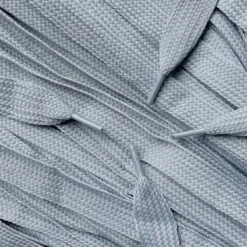
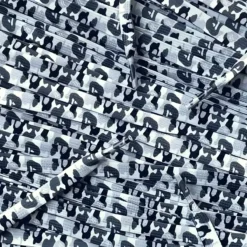
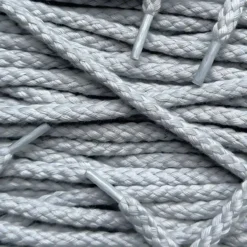
Grey laces: contrast without a hard edge
On a black shoe, white draws a hard line and grey draws a quiet one. That makes grey the choice when you want the lacing to read as separate without turning it into a focal point. Light grey works on dark models, charcoal on light ones. Metallics belong here too: silver laces get their effect from reflection rather than pigment. If low-light visibility is the goal, reflective round laces are the functional version. For sport use, see running shoes.
Frequently asked questions
Do silver laces belong under grey?
Yes. Metallic silver sits here because the base tone is grey and the effect comes from the finish.
Which grey works on a black shoe?
Light grey or marl. Charcoal disappears into the upper and adds nothing.
What does marl mean?
A yarn mixing light and dark fibres, so the lace reads as flecked instead of solid.