


Blogs
No Tie Laces: How Elastic Laces Work
Tying your shoes every morning, a lace that comes undone during a workout or a child who cannot fasten their own shoes yet: no tie laces put an end to all of that. You set them up once and from then on you slip in and out without tying. In this guide you will learn how elastic laces work, who they are useful for and how to lace them in a few minutes.
In short
- Elastic laces stretch with your foot. You secure them with a no-tie lock, so you never have to tie them again.
- They are 120 cm long and you cut them to size, so you do not need to choose a length.
- They are handy for kids, recreational running, triathlon and anyone who finds bending down difficult.
- Comfort laces are not elastic laces. They are regular laces with a little stretch that you tie as normal.
How do elastic laces work?
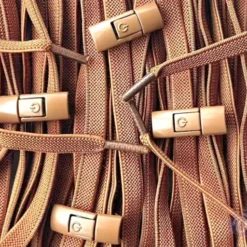
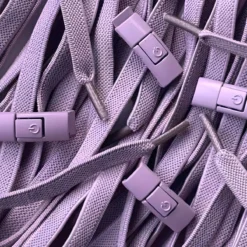
An elastic lace is a flat, stretchy band with a locking mechanism. You lace it like a regular lace. Then you pull it to the tension you like and secure it with the lock. The lock holds the tension in place, so you no longer have to tie anything.
Because the band stretches, the shoe gives as you step in and then pulls snugly around your foot again. The flat band spreads the pressure across your instep. That makes pressure points less likely than with a thin round elastic cord.
Which length of elastic laces do you need?
The elastic laces from Veter.nl are 120 cm long. That is not a limitation. You simply cut off whatever is left over, so the lace adapts to your shoe. Unlike regular laces, you do not need to work out which length you need. They are 8 mm wide and available in many colours. If you have several pairs of shoes or a family full of sneakers, there is also a 5-pack.


How to fit elastic laces
You lace elastic laces criss-cross, pull them to tension with the shoe on your foot and secure the ends in the no-tie lock. Then you cut off the excess. Leave a few centimetres so you can adjust later. The full step-by-step guide is in how to fit elastic laces, with fixes for when the tension is not right.
Who are no tie laces for?
Elastic laces are for anyone who wants to get in and out of their shoes quickly, without loose laces. They are especially useful in these situations:
- Children who cannot tie laces yet. They put on their own kids shoes and there is no loose lace to trip over.
- Recreational running. The lace does not come undone while you run and the tension stays even. They work well in running shoes for your laps and training runs.
- Triathlon. In the switch from cycling to running every second counts. With elastic laces you slip into your running shoes without tying.
- Older people and anyone who finds bending down difficult. If you cannot easily reach your feet, elastic laces mean you no longer need to tie anything.
- Anyone who takes their shoes off and on often, for example at home or at work.
If you race at high speed or play sports with a lot of lateral movement, regular laces give you more control. A regular lace can be tightened precisely at each eyelet. An elastic lace always gives a little.
Elastic laces or comfort laces?
Veter.nl also carries comfort laces. The names sound alike, but they are very different laces. Comfort laces are regular laces with a little stretch. You tie them like any other lace. Only elastic laces truly stretch, so you can slip in and out without tying.
| Elastic laces | Comfort laces | |
|---|---|---|
| Stretch | Fully elastic | A little stretch |
| Tying | Not needed, the no-tie lock holds the tension | Yes, you tie them as normal |
| Length | 120 cm, cut to size | 100, 120, 140 or 160 cm, chosen by the number of eyelets |
| Width | 8 mm | 9 mm |
| Choose them if | You never want to tie your shoes again | You tie your laces but want a lace with a little give |
If you never want to tie your shoes again, choose elastic laces. If you prefer to tie them yourself, comfort laces or basic flat laces are the better choice.
Frequently asked questions
Do elastic laces fit every shoe?
They fit most shoes with eyelets, such as sneakers, running shoes and kids shoes. Because you cut off the excess, the number of eyelets hardly matters.
Are elastic laces sturdy enough for running?
For recreational running and everyday use, yes. In high-speed races regular laces give more control.
What do I do if the lock slips?
The mechanism stays in place during normal use. If it does slip, simply set it again. You do not need to replace the lace.
Can I wash elastic laces?
Yes, by hand in lukewarm water. Do not wring them and let them air dry. Heat from a tumble dryer makes the elastic lose its stretch.
Done with tying? Browse every colour of elastic laces and convert your shoes in a few minutes.