


Blogs
Worn Heel Lining? How to Repair It Yourself
It starts with a thin spot on the inside of your heel. A few weeks later there’s a hole and the hard material underneath rubs against your sock. A worn heel lining is one of the most common reasons people throw away an otherwise perfectly good pair of shoes. A shame, because you can usually fix it yourself in a few minutes. In this blog you will read why the heel lining wears out, how to repair it and how to stop it happening again.
In short
- The heel lining wears through friction: your heel moves up and down slightly with every step.
- Kicking shoes on and off without undoing the laces speeds up the wear considerably.
- You can repair a worn heel lining yourself with self-adhesive repair patches, without needle and thread or a cobbler.
- Stick a patch on a thin spot early, and you’ll stop a hole from forming.
- Secure lacing, such as a heel lock, keeps your heel still and spares the lining.
Why does the heel lining wear out?
Through friction. With every step your heel moves slightly up and down inside the shoe. That movement rubs the same spot thousands of times a day. The fabric on the inside of the heel gets thinner until a hole appears. Underneath there’s often a harder material or foam, which then rubs against your sock or heel.
A few things speed up that process:
- Kicking shoes on and off. If you slide your shoe off without undoing the laces, you push the heel counter down and the lining rubs even more.
- Laced too loosely. If the shoe sits loosely around your foot, your heel moves more and the friction is greater.
- The wrong size. A shoe that’s too big lets your heel move even more.
- The same pair every day. Damp fabric wears faster. A pair that can dry for a day lasts longer.
How do you repair a worn heel lining?
The quickest fix is a self-adhesive repair patch. That’s a thin, strong piece of fabric with an adhesive backing, which you stick over the worn spot. The fit of your shoe doesn’t change and you don’t need a needle or a cobbler.
- Clean and dry the lining. The patch won’t stick to wet or greasy fabric. Brush away loose threads and trim any frayed ends.
- Find the right spot. Hold the patch with its backing still on against the heel and see where it fits best. It should cover the worn spot generously.
- Stick the patch on. Peel off the backing and stick the patch onto the lining.
- Press it down firmly. Rub your thumb over the whole patch, especially along the edges. That’s where it lets go first if it isn’t pressed down well.
The heel lining repair patches come in sets of 2, for left and right, in Small for size 40 and below and Large for size 40.5 and above.
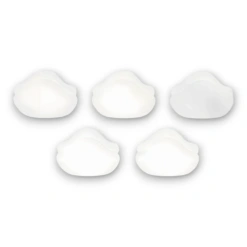
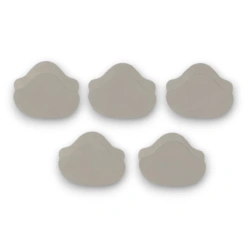
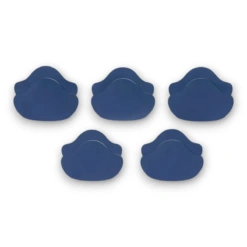

Which color repair patch should you choose?
The color closest to your lining, so the repair hardly shows.
| Lining color | Patch color |
|---|---|
| Black or very dark | Black |
| Bright white | White |
| Cream, off-white or yellowed | Cream |
| Grey | Grey |
| Dark blue | Navy |
| Red | Red |
A lining that was once white is rarely still brilliant white after a few years. That’s why cream is often the best choice for older shoes and vintage sneakers. A bright white patch would stand out too sharply.
When should you go to a cobbler?
When the damage goes beyond the fabric. If the material under the lining is damaged too, the heel counter is broken or it’s an expensive pair of leather shoes, a cobbler can replace the lining or rebuild the heel. That costs more and takes longer, but for a good shoe it’s worth it. For a worn spot or a hole in the fabric, a repair patch is usually enough.
How do you prevent a worn heel lining?
- Undo your laces when putting shoes on and taking them off, and use a shoehorn.
- Tie your shoes securely, so your heel doesn’t slide up and down. On sports shoes, a heel lock using the extra eyelet at the top helps. How to lace it is explained in our blog on how to lace shoes.
- Patch it in time. When the fabric gets thin, stick a patch on now. That way no hole forms.
- Alternate between two pairs, so the lining can dry.
Read on: lacing for a high instep and how to refresh old shoes in 6 steps.
Frequently asked questions
What is the difference between repair patches and heel grips?
Heel grips are thick pads that stop you slipping out of your shoe. They take up space and change the fit. Repair patches are thin and only cover a worn lining.
Do the patches stay on?
Yes, on a clean and dry lining. Press the edges down well, in particular. Don’t stick them onto wet or greasy fabric.
Can I stick a patch on before there’s a hole?
Yes, and that’s actually the best way. A patch on a thin spot stops a hole from forming later.
What size repair patch do I need?
Small fits shoes up to and including size 40, Large fits size 40.5 and above.
All colors are in heel lining repair. More care products in shoe care.